Sleeping Kitten Embroidery: A Designer's Review
As an embroidery designer who frequently sources assets for both personal creative exploration and commercial client orders, I approach every new machine embroidery design with a critical eye. When browsing the Baby Animals category on Creative Fabrica, the Sleeping Kitten Embroidery design immediately caught my attention. It is not merely about finding a cute graphic; it is about identifying a versatile embroidery file that can withstand the rigors of production while maintaining aesthetic integrity. After evaluating this design for potential use in real-world projects ranging from nursery decor to custom apparel, here is my honest assessment of its performance, versatility, and value for fellow makers and shop owners.
First Impressions and Visual Mood
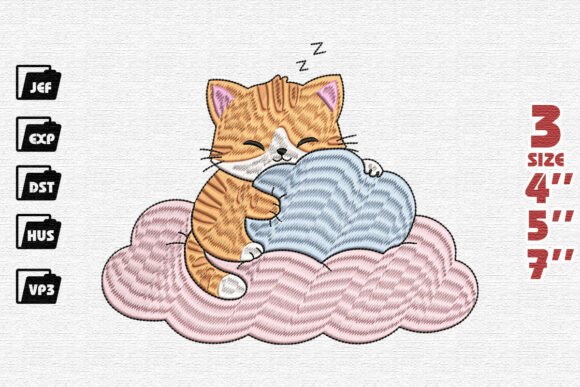
The immediate appeal of the Sleeping Kitten Embroidery lies in its emotive quality. In the competitive space of handmade products, capturing a specific mood is essential for buyer connection. This design exudes tranquility and softness, making it inherently suitable for items intended for comfort or relaxation. Unlike generic clipart converted to stitches, this design appears to have been digitized with the end texture in mind. The visual flow suggests a balance between fill stitch areas for coverage and delicate running stitch details for definition.
For Etsy sellers and boutique owners, this "cozy" factor is a significant selling point. The design does not look aggressive or overly complex; instead, it offers a gentle aesthetic that photographs beautifully. When creating a printable mockup or staging a finished product for social media, the sleeping pose naturally draws the viewer’s eye without competing with other design elements. This makes it an excellent candidate for minimalist branding where the embroidery itself serves as the primary focal point.
Evaluating Size Versatility for Commercial Use
One of the most practical aspects of this Creative Fabrica embroidery asset is the availability of three distinct sizes: 4″, 5″, and 7″. For a professional embroiderer, having pre-digitized size variations is invaluable. Resizing a design by more than 20% can often distort stitch density, leading to gaps in fill areas or puckering in satin columns. Having these specific sizes ensures that the integrity of the Sleeping Kitten Embroidery remains intact across different applications.
- The 4″ Version: This size is ideal for smaller hoops and tighter spaces. I envision using this for baby bibs, pocket placements on toddler shirts, or even as a standalone embroidered patch. At this scale, checking the clarity of facial features is paramount before running a full production batch.
- The 5″ Version: The perfect middle ground for standard tote bags and kitchen towels. This size allows for enough detail to be visible from a distance while remaining manageable for standard home embroidery machines. It strikes a balance that works well for sweatshirt embroidery centered on the chest.
- The 7″ Version: Best reserved for larger statement pieces such as pillow covers, blanket corners, or the back of adult hoodies. The larger canvas allows the digitizer’s shading techniques to shine, adding depth that might be lost in smaller formats.
Fabric Compatibility and Stabilization Strategy
A digital file is only as good as its execution on physical fabric. When planning to use Sleeping Kitten Embroidery for a customer order, substrate selection dictates your stabilization strategy. Because this design likely involves varying stitch types to create the fur texture and sleeping form, testing on scrap fabric is non-negotiable.
For custom apparel like sweatshirts or t-shirts, the knit structure requires careful handling. I recommend using a cut-away stabilizer to prevent the design from distorting after washing. The weight of the embroidery must be supported permanently. Conversely, if you are stitching this onto a woven cotton tote bag design or a linen tea towel, a tear-away or wash-away stabilizer may suffice, provided the fabric has enough body to support the stitch density.
Dark fabrics present another consideration. If you plan to offer this sleeping kitten in white or pastel threads on navy or black garments, ensure your underlay is sufficient to prevent the dark fabric from grinning through the stitches. Always run a test sew-out on the exact material you intend to sell to verify thread tension and coverage.
Application Ideas for Handmade Businesses
Beyond standard apparel, the Sleeping Kitten Embroidery shines in niche markets. For those specializing in baby items, this design is a natural fit for heirloom blankets and diaper bags. However, do not limit yourself to the nursery. The universal appeal of cats makes this viable for adult stationery, journal covers, and even pet owner merchandise. As a personalized gift option, this design pairs exceptionally well with monograms or names placed beneath the kitten, creating a balanced composition for holiday sales or birthday orders.
For craft fair vendors, having a variety of price points is key. The 4″ version allows for lower-cost impulse buys like zipper pouches or coasters, while the 7″ version justifies a premium price point on luxury throw pillows. This scalability helps maximize revenue per design asset. Additionally, because the file includes industry-standard formats like PES, JEF, DST, VP3, and EXP, it integrates seamlessly into almost any commercial or domestic workflow without requiring conversion software.
Technical Considerations and Quality Control
While the file formats are comprehensive, responsible designers must always verify technical specs before commercial use. Although the product description lists EMB, VP3, EXP, PES, JEF, HUS, and DST, you should confirm the specific stitch counts and color changes for each size within your own machine software. Understanding the color sequence helps in estimating production time and thread consumption.
Pay close attention to jump stitches and trims. Depending on your machine’s capabilities, you may need to optimize the file to reduce manual trimming time during mass production. If the design utilizes an applique design technique for certain elements, ensure your placement lines are accurate and that your tack-down stitches are secure. For commercial embroidery, efficiency is profit; spending five minutes optimizing the file pathing can save hours over a large production run.
Furthermore, review the licensing terms on the Creative Fabrica product page meticulously. While many files allow for the sale of physical finished products, restrictions often apply to sharing the digital file or using it for print-on-demand services. Protecting your business means respecting intellectual property rights and ensuring your usage aligns with the designer’s license.
Enhancing Product Value and Buyer Trust
Ultimately, incorporating high-quality designs like Sleeping Kitten Embroidery elevates the perceived value of your brand. Customers can distinguish between a hastily downloaded freebie and a professionally digitized design. Clean edges, appropriate density, and thoughtful artistic composition signal professionalism. When buyers see consistent quality in your handmade product line, trust is established.
Use this design to build a cohesive collection. Pair it with complementary fonts or other animal motifs from the same designer to create a unified shop aesthetic. High-quality photography of the stitched result, rather than just the digital mockup, further reinforces buyer confidence. Showcasing the texture and dimension of the embroidery proves that you understand your craft.
In conclusion, the Sleeping Kitten Embroidery represents a solid investment for designers seeking a reliable, emotionally resonant asset. Its multi-size availability and broad format compatibility make it a practical tool for various substrates and business models. By applying proper stabilization techniques, conducting thorough test runs, and adhering to licensing guidelines, this design can become a staple in your commercial embroidery repertoire, delighting customers and streamlining your creative workflow.